Audio devices become scriptable, reproducible, and version-controllable instead of being trapped in a visual editor.
Made with Python, Max for Live, Audio DSP and PyPI.
- 100+ DSP blocks
- Tests assert audio behavior
- Reverse-engineering pipeline
2026. Active.
Max for Live devices written in Python instead of clicked together in a GUI. Pure standard library, ships to PyPI.
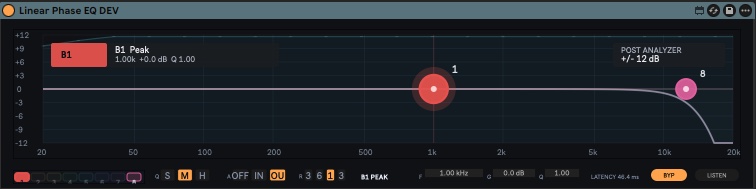
Write scripts, emit .amxd files straight to your Ableton User Library. No Max GUI required.
Building Max for Live devices means clicking around a GUI, which makes the work hard to version, review, or reproduce.
Pure-stdlib Python library that emits valid .amxd files: 100+ DSP blocks, a theme system, jsui visual engines, a recipe layer for common combos, and a reverse-engineering pipeline that reads existing devices back into Python.
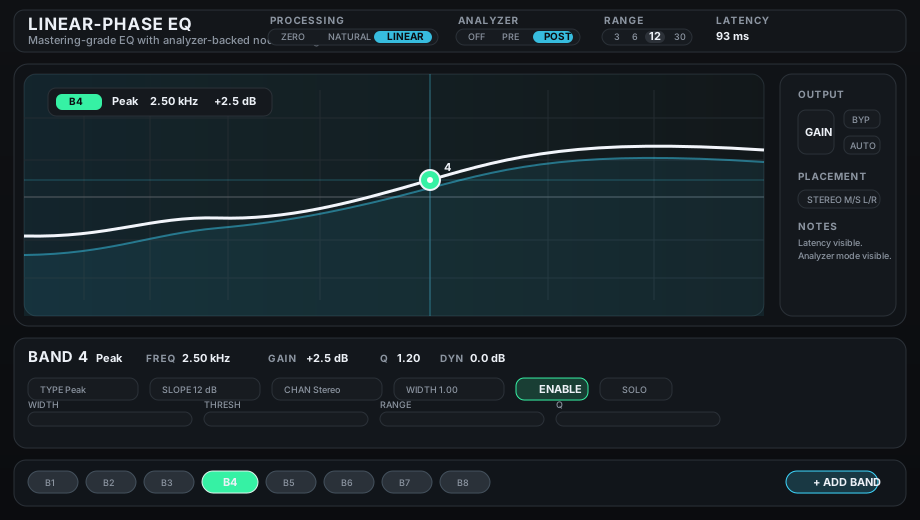
Ships on PyPI with a test suite that asserts the produced .amxd files actually load in Ableton, and a corpus-mining toolchain that turns external devices into structured fixture data.
Audio devices become scriptable, reproducible, and version-controllable instead of being trapped in a visual editor.
Made with Python, Max for Live, Audio DSP and PyPI.